
The HISE forum recently celebrated its 10th birthday, time flies! It feels like not so long ago at all that I signed up and got started with HISE. Since then HISE, as a platform, has matured and gained wider adoption. There are now hundreds of commercial plugins built with HISE. From cinematic sound design tools to detailed recreations of acoustic instruments.
In the video above I’ll take you on a quick tour of some of those that have stood out to me. If you’d rather read than watch, this article expands on the video with extra details, links, and background that didn’t make it into the recording. Leave a comment at the bottom of the page and let me know what HISE based plugins you’re using.
Mntra
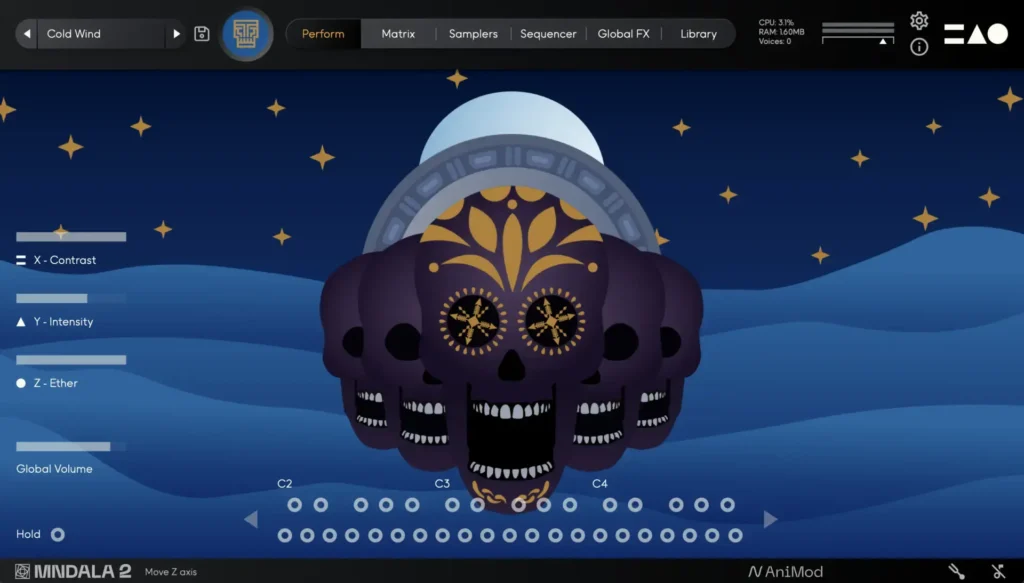
Mndala by Mntra is a great example of how far you can take visual design and scripting in HISE. It’s a free player plugin that loads different expansion packs, each with its own sounds and animated interface. Every instrument follows the same idea built around three macro controls: X, Y, and Z. These provide access to a deep range of parameters in a simple and consistent way.
I’ve been working with Mntra for a number of years and I helped to build the first version of their engine. So I’m quite familiar with how it all works behind the scenes. There’s a lot of scripting involved to manage the dynamic controls, animations, and expansion system. The current team has taken it even further, with custom DSP effects, dynamic modulators, and an integrated downloader and installer.
The interface is built entirely with vectors, there are no image files, and the animations are handled either through pure scripting or using lotties. This allows the interface to scale to any size screen without distorting, and give Mndala one of the most distinctive interfaces made with HISE.
Lunacy Audio

Cube by Lunacy Audio pushes HISE right to its limits. It combines HISE’s audio and MIDI systems with custom 3D graphics built using OpenGL and JUCE, with everything held together through scripting. It’s a reminder that HISE isn’t just for simple or image-based interfaces. You can extend it with C++, shaders, and external libraries to create something far more interactive and expressive.
The team at Lunacy originally came from Kontakt development but wanted a more scalable and flexible platform. HISE was the perfect foundation, and almost all of Cube (around 45,000 lines) is written in HISE Script. The only part that isn’t is the purely visual OpenGL layer.
Their work shows how much is possible with HISE scripting on its own. It also demonstrates how far you can go when you combine it with external components.
ZAK Sound
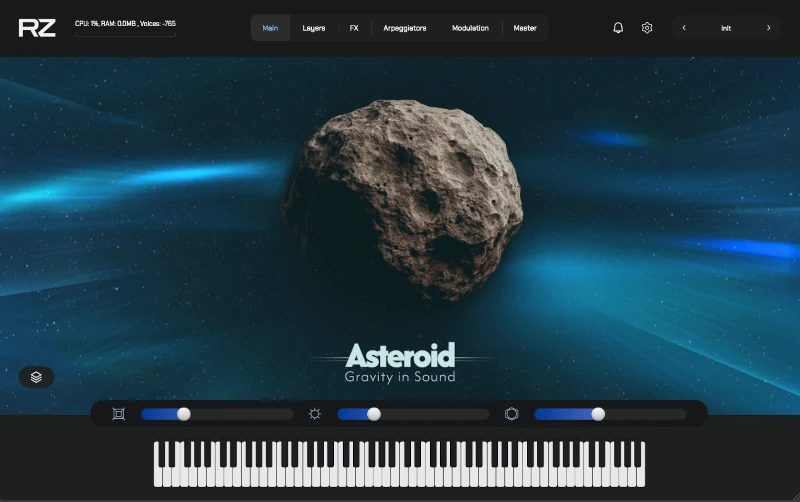
ZAK Sound take a structured approach to plugin development. They’ve built a custom HISE-based player called Raizes and released a range of expansion packs for it. This method makes it easy to create new instruments that share the same core structure. They can swap out samples and adjust the interface for each expansion without needing to rewrite any code.
It’s efficient for developers and helpful for users. A consistent interface means musicians only need to learn one layout to use every instrument in the series. This approach saves time, reduces errors, and creates a familiar experience across the whole product line.
Alongside their instruments, ZAK Sound also make effects plugins. One of the highlights is Particles, a multi-effect with an animated interface and modern design. Check it out here.
Felt Instruments

Felt Instruments take the opposite approach to many developers, focusing on minimalism rather than complexity. Their plugins feature simple, elegant layouts with fewer controls, yet everything is easily accessible and controllable. The clean design reflects the character of their sounds: intimate, detailed, and expressive.
It’s a good example of how HISE doesn’t force you into any particular visual style. You can build something bold and animated, or something quiet and understated. HISE gives you the freedom, through scripting and design, to shape your plugins around the experience you want users to have.
https://www.feltinstruments.com/
GoranGrooves

GoranGrooves have built a range of drum instruments that all share the same underlying engine. Unlike Mntra or ZAK Sound, they don’t use a single player plugin with an expansion system. Instead, each instrument is a standalone plugin built from a shared HISE template.
This approach has clear advantages. A fix or improvement made to one plugin can be applied across the whole range, and new features can be added to every instrument with minimal effort. At the same time, each plugin can still have its own unique features and personality without affecting the rest.
It’s a common strategy among experienced HISE developers. By keeping the core scripting modular and reusable, you can focus on creating new content instead of rebuilding the same systems repeatedly. It’s an efficient way to grow a consistent product line while maintaining quality.
Nightfox Audio
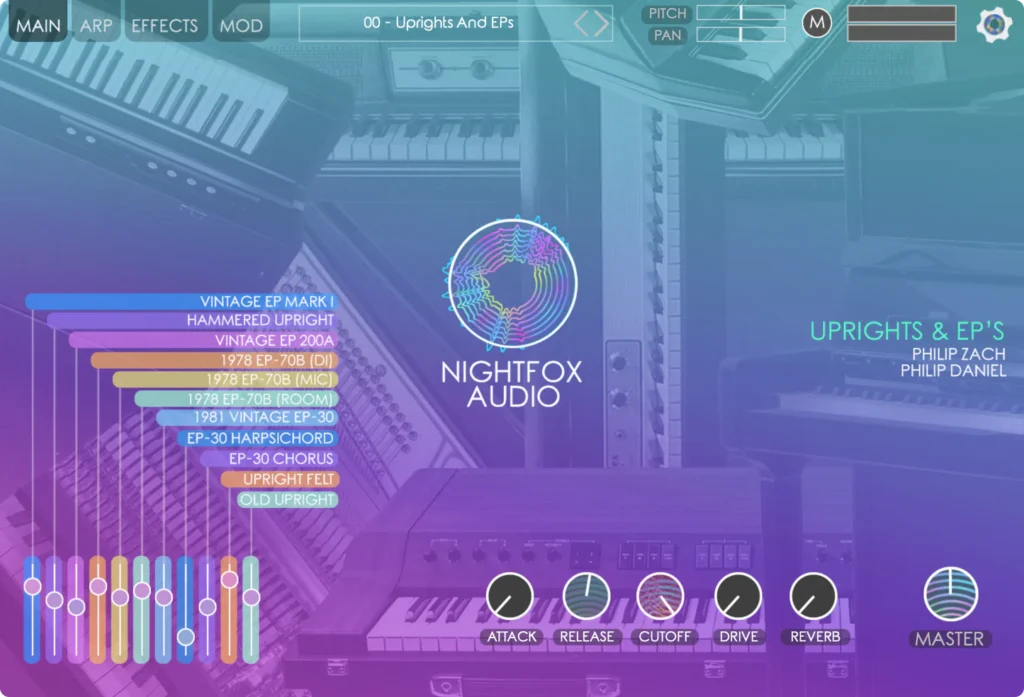
Nightfox Audio build their instruments around a shared template project. Each plugin has its own theme and samples, but the layout and main features remain consistent. Elements like the pattern builder and modulation tables appear across multiple instruments, creating a clear and familiar style without making the plugins feel repetitive.
This approach is built on a strong scripting foundation. Once the systems for sequencing or modulation are in place, they can be reused and refined across future projects. It’s an efficient way to speed up development and build a recognisable brand identity across a product range.
NoiseAsh

NoiseAsh take a different route from most HISE developers. Their focus is on recreating the look and feel of classic studio hardware, blending skeuomorphic details with elements of modern flat design. The result is a set of plugins that look and feel like analogue gear with a modern twist.
What’s interesting about their work is how seamlessly HISE adapts to that aesthetic. The same framework that supports minimalist vector interfaces or animated layouts can also reproduce realistic knobs, meters, and textures. It shows how flexible HISE can be, both visually and technically.
Sampleson

Sampleson’s plugins stand out for their design originality. Each one has its own visual style and concept, yet together they form a clear and recognisable brand. Their interfaces are clean, often minimalist, and designed to reflect the unique character of each instrument. Some use flat vector layouts, others have soft gradients or subtle textures, but all share the same focus on clarity and usability.
Their plugins explore ideas that go beyond typical sampling. Haptic Perc, for example, uses physical modelling to turn everyday objects into playable percussion instruments through the microphone input. It’s an inventive use of scripting and signal processing that shows how HISE can support unconventional ideas as easily as traditional sample playback.
Wave Alchemy

Wave Alchemy use HISE to develop both instruments and effects, blending detailed sound design with polished interfaces. I worked with them to create a reusable template for their reverb plugins, which they’ve since adapted across several products. This allows them to build a family of related plugins, each with its own look, sound, and features, without needing to rewrite the core code.
Their flagship instruments, such as Triaz, share the same attention to layout and visual detail, blending images, icons, and vector graphics to achieve a distinctive hardware-inspired look.
This mixed approach demonstrates one of HISE’s main strengths when it comes to user interface design. You’re not restricted to a single method. You can combine scripted elements with image assets, use vectors where scalability matters, and design each part of the plugin to suit its purpose. Wave Alchemy show how far that flexibility can be taken in a professional workflow.
https://www.wavealchemy.co.uk/
Sinuslabs

Sinuslabs plugins have a distinct visual style that mixes clean design with subtle animation. Their plugins Reach and KO look very different at first glance, but they share the same visual language and design ideals. Both use responsive graphics to reflect real-time changes in sound, such as animated EQ curves or dynamic level displays.
These visual elements are handled through scripting rather than heavy image assets. It keeps performance smooth while giving the interfaces a sense of movement and depth. Sinuslabs also release for Linux alongside Windows and macOS, showing how well HISE can support cross-platform development for independent plugin makers.
Auddict
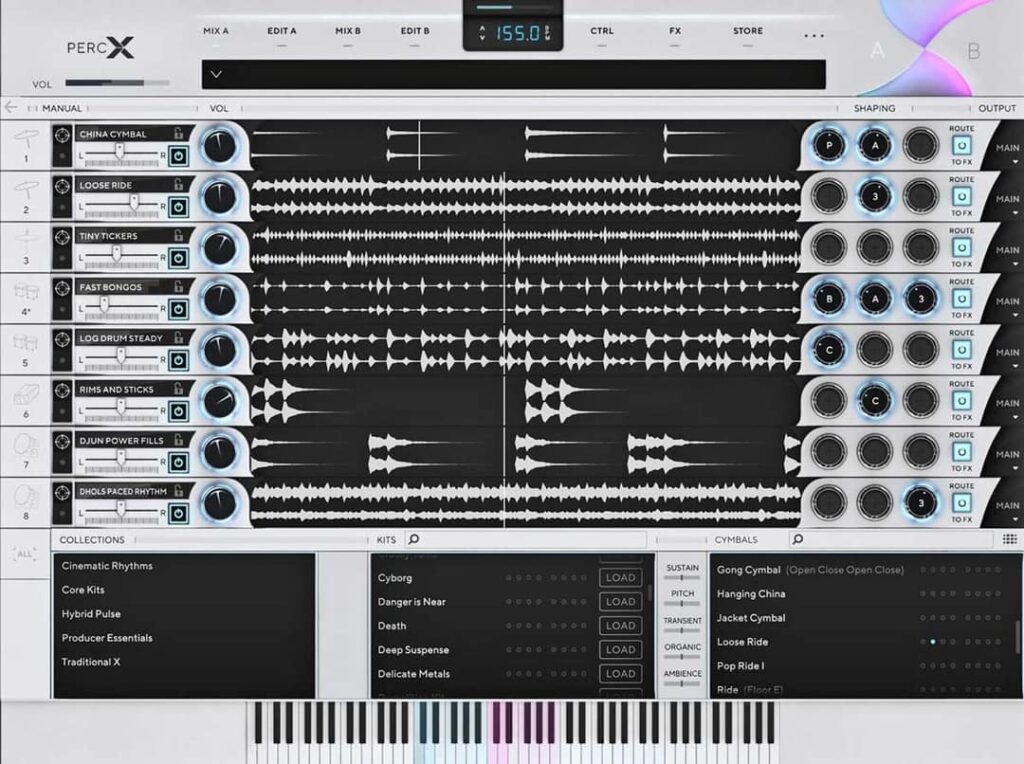
Auddict’s PercX is one of the most ambitious commercial projects ever built with HISE. It’s a complete percussion production environment that combines loop playback with a traditional sample library workflow. Each lane in the multi-track engine can hold and manipulate loops, giving users control over layering, chopping, and rearranging rhythms in real time.
HISE lacks true beat slicing capabilities, but PercX gets around this with some clever scripting and sample preprocessing. With a single click, any loop can switch from playback mode to a fully playable instrument with multi-round robin and velocity layers, offering both flexibility and precision.
The plugin was developed by Christoph Hart, the creator of HISE, working directly with Auddict. Its development led to major improvements in several advanced areas of HISE, including the expansion system, multi-track MIDI handling, and web requests. PercX brings together complex scripting, dynamic audio processing, and a refined interface. It’s is a great example of how far HISE can be pushed.
Libre Wave

Libre Wave is my own company, and all of my plugins are built with HISE. One of them is the Rhapsody Player, a free and open-source plugin that uses HISE’s expansion system to load different instruments. Other developers can create their own expansions for it, and HISE even includes built-in support to export directly from a project to a Rhapsody expansion. This makes it easy for developers to release instruments without needing to compile their own plugins.
Where possible I build my interfaces with vector graphics instead of images, so they scale cleanly and stay sharp on any screen. My effects plugin Sordina is an exception, combining vectors with multi-resolution image assets that adjust automatically to the display size.
Wow I’m blown away. I’ve been a user of a number of these plugins and had no idea what was powering them. The Mntra ones have always been a favorite – both because of their aesthetic as well as the niche things they do (ie a death whistle? Yes please). Really impressed. Guess I have to really apply myself to HISE dev
Hi Dave, I guess you know most of these but here you go – some things I built in HISE:
– Tracktion Horizen (https://www.tracktion.com/products/horizen)
– Tracktion Atmosia (https://www.tracktion.com/products/atmosia)
– All the ULTRA engine products over at Sample Logic (e.g. https://www.samplelogic.com/products/morphestra-ultra/)
– I built the NightFox products too
Theres a bunch of other stuff for other content owners too, but I think that’s enough to get the idea of what’s possible.
Great. The only Tracktion products without a Linux version.
“From HISE it’s just a few clicks to export a Linux VST3” , so it seems.